Frankie Braun · 13 September 2026
The Role of Precision Engineering in Modern Milling Efficiency Gains
Foundations of Precision in Milling Operations
Precision engineering focuses on achieving tight tolerances and repeatable outcomes in material removal processes, and this approach drives measurable improvements in milling efficiency across industries. Researchers at institutions studying manufacturing systems note that components machined to within microns reduce the need for secondary finishing steps, which in turn shortens overall production cycles and lowers energy consumption per part. Data from advanced facilities shows that when machine tools maintain positional accuracy below five micrometers, scrap rates drop significantly compared with older equipment operating at wider tolerances.
Modern milling centers incorporate linear encoders, thermal compensation systems, and vibration damping technologies that work together to stabilize cutting conditions. These elements allow operators to run higher feed rates without compromising surface quality, and the result appears in productivity metrics tracked by plant managers. Observers note that shops adopting such systems often report throughput increases of 20 to 35 percent within the first year of implementation, according to figures compiled by the National Institute of Standards and Technology in its advanced manufacturing reports.
Key Technologies Driving Efficiency
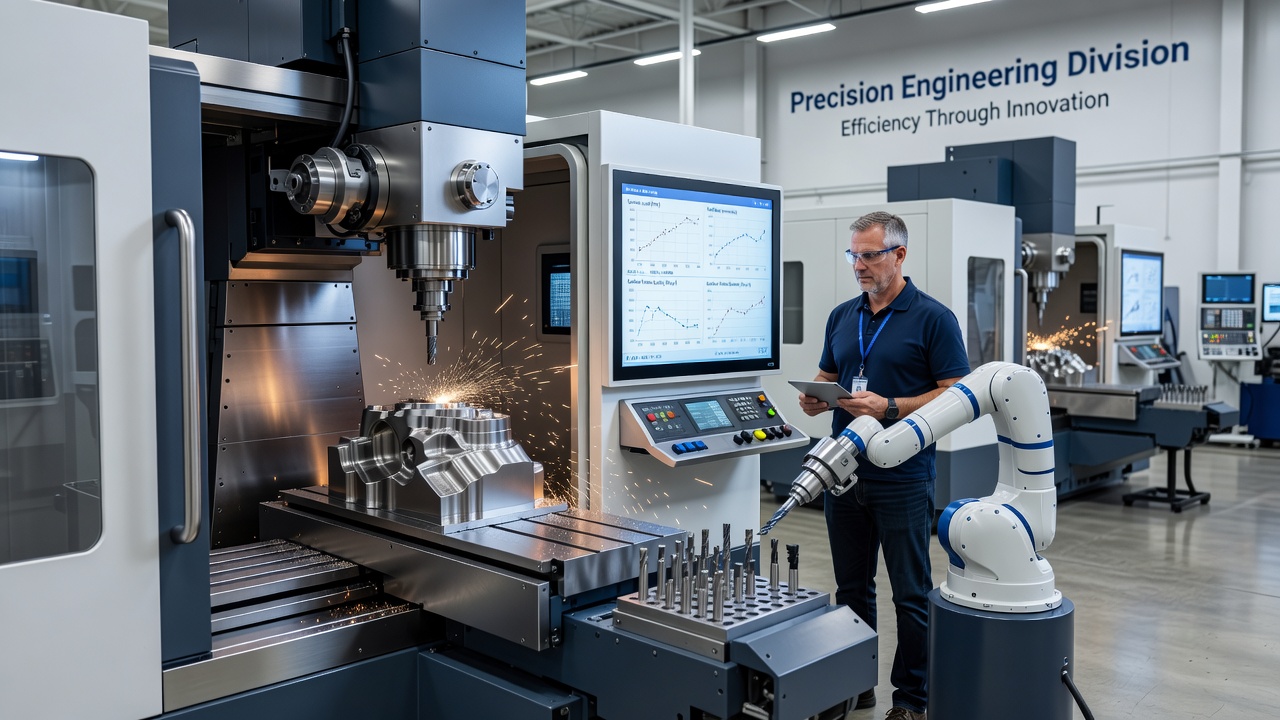
Computer numerical control upgrades represent one visible layer of progress, yet the deeper gains come from integrated sensor networks that feed real-time data into adaptive control algorithms. Spindle load monitoring combined with acoustic emission sensors detects tool wear before it affects dimensional accuracy, and this predictive capability prevents unplanned downtime that historically accounted for substantial lost output. Engineers who have analyzed production logs find that early intervention extends tool life by 15 to 25 percent while maintaining consistent chip loads.
Another contributor involves the selection of machine structures with high static and dynamic stiffness. Cast iron or polymer concrete bases reduce deflection under load, which permits aggressive cutting parameters without chatter. Studies conducted in European research consortia indicate that stiffness improvements alone can raise material removal rates by up to 40 percent on aluminum and titanium alloys. The same research highlights that calibration routines performed weekly rather than monthly keep geometric errors within acceptable limits longer, supporting sustained efficiency.
Impact on Waste Reduction and Resource Use
Precision engineering also influences material utilization rates because parts exit the machine closer to final dimensions. Aerospace suppliers, for instance, document buy-to-fly ratios that improve when milling strategies exploit five-axis simultaneous motion and trochoidal tool paths. These methods distribute cutting forces more evenly, reduce heat buildup, and minimize the volume of material removed as chips. Government statistics from Canadian manufacturing surveys show corresponding declines in raw material purchases per finished component when precision protocols are applied consistently.
Energy consumption follows a similar pattern. Machines equipped with high-efficiency motors and regenerative braking systems recover kinetic energy during deceleration phases, and the savings compound when cycle times shorten due to optimized tool engagement. Reports from Australian industry bodies tracking heavy engineering sectors note that facilities combining precision tooling with energy monitoring software achieve reductions in kilowatt-hour usage per ton of machined metal ranging from 12 to 18 percent over baseline operations.
Case Examples from Industry Adoption
One automotive transmission plant in the Midwest implemented hydrostatic guideways and laser-based tool setters in 2024, then recorded a 28 percent rise in parts produced per shift within six months. Maintenance logs revealed fewer spindle replacements because vibration signatures stayed within narrow bands. A separate medical device manufacturer in Switzerland adopted in-process probing on its milling lines and cut inspection time by half while meeting stricter ISO tolerance requirements. Both cases illustrate how incremental engineering refinements translate into measurable operational metrics rather than isolated quality improvements.
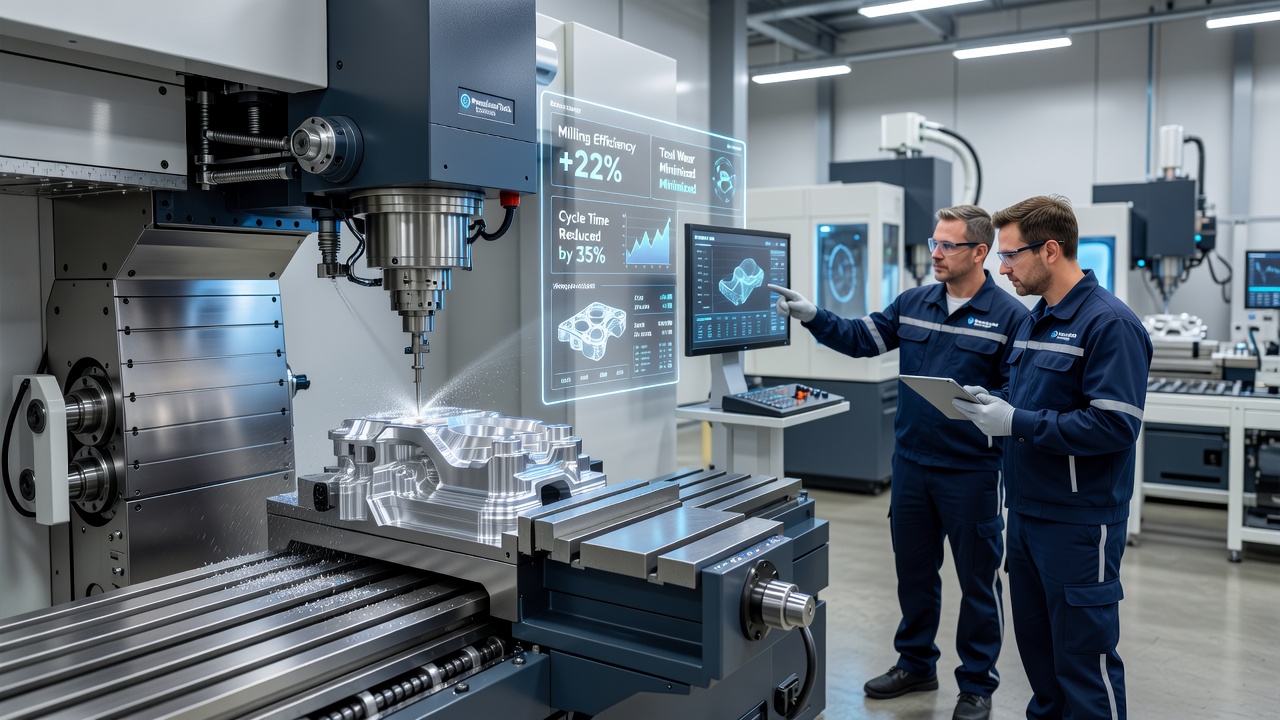
September 2026 brought additional visibility when the Global Manufacturing Technology Summit presented aggregated data from 47 facilities that had completed precision retrofits. The compiled results pointed to average cycle time reductions of 22 percent and a corresponding drop in per-part carbon emissions tied to electricity and compressed air usage. Attendees discussed how these outcomes scale when supply chains standardize on common datum systems and shared calibration standards.
Future Directions and Measurement Standards
Emerging developments center on digital twins that simulate milling dynamics before metal is cut. These models incorporate material property variations and machine thermal states to predict optimal parameters, and early adopters report further efficiency lifts beyond those achieved through hardware alone. Standards organizations continue to refine definitions of precision classes so that comparisons across equipment remain consistent regardless of geographic location or supplier.
Integration with broader factory networks allows milling cells to adjust autonomously when upstream processes introduce slight variations in stock material. This closed-loop capability reduces operator intervention and supports lights-out operation during overnight shifts. Evidence from pilot lines suggests that such autonomy adds another layer of throughput stability without increasing labor costs.
Conclusion
Precision engineering underpins measurable efficiency gains in contemporary milling through tighter control of motion, force, and thermal variables. Facilities that apply these principles consistently record lower scrap, extended tool life, reduced energy draw, and shorter cycle times, as documented in reports from multiple national and international sources. Continued refinement of sensing, control algorithms, and structural design points toward additional incremental improvements rather than revolutionary leaps, yet the cumulative effect on manufacturing economics remains substantial.